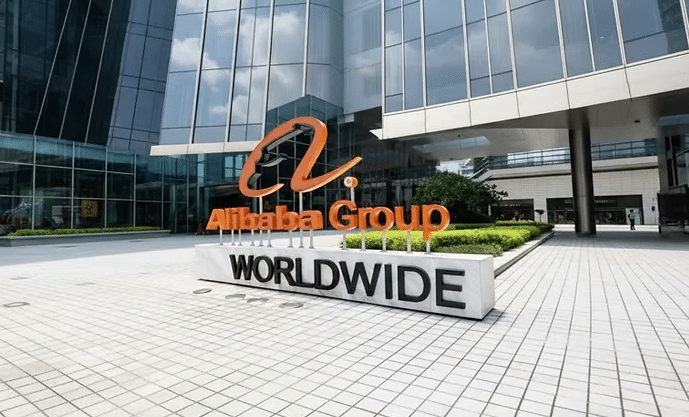

Alibaba Group is a Chinese multinational company operating across e-commerce, cloud computing, digital media, and financial technology (fintech). Headquartered in Hangzhou, Alibaba is best known for reshaping how goods are bought, sold, and paid for in China—and increasingly around the world.
Founded in 1999, Alibaba pioneered a platform-based business model that connects manufacturers, merchants, service providers, and consumers through data-driven marketplaces rather than traditional retail infrastructure. This approach helped the company scale rapidly and become one of the most influential Chinese companies in history.
What Does Alibaba Do?
Unlike traditional retailers, Alibaba does not primarily hold inventory or operate its own logistics network. Instead, it coordinates a vast digital ecosystem that includes sellers, advertisers, payment providers, and cloud services.
Its best-known platforms include:
- Alibaba.com (global B2B marketplace)
- AliExpress (international retail platform)
- Taobao (C2C marketplace)
- Tmall (B2C platform for brands and retailers)
Together, these platforms serve hundreds of millions of consumers and businesses worldwide.
1999–2006: Early Years, Taobao, and Alipay
Alibaba was founded in Hangzhou by Jack Ma and a group of partners with the initial goal of helping Chinese manufacturers reach overseas buyers. The company first focused on business-to-business (B2B) commerce, connecting exporters with global markets.
In 2003, Alibaba launched Taobao to compete with eBay in China. Designed for individual sellers and small businesses, Taobao offered free product listings and quickly gained market dominance by tailoring its services to Chinese consumers.
To support online transactions, Alibaba introduced Alipay in 2004. This digital payment service later evolved into Ant Group, which uses advanced technologies such as artificial intelligence to provide payments, credit, and financial services to consumers and small businesses.
Ant Group IPO and Regulatory Challenges
After Alipay became one of China’s dominant mobile payment platforms, Ant Group planned a landmark IPO in 2020. However, the listing was suspended by Chinese regulators over concerns related to financial risk, consumer debt, and regulatory compliance.
Although the IPO did not proceed, Ant Group remains a major fintech player, with Alibaba retaining a significant ownership stake. The episode marked a turning point in China’s regulatory approach toward large technology companies.
2007–2016: Expansion and Record-Breaking IPOs
In 2007, Alibaba went public on the Hong Kong Stock Exchange, marking one of the largest IPOs since Google’s listing in 2004. During this period, the company articulated a long-term vision to build an open and coordinated e-commerce ecosystem spanning online and offline commerce.
Key expansions followed:
- Tmall (2008): A Taobao spin-off allowing brands to sell directly to consumers
- Alibaba Cloud (2009): Also known as Aliyun, now one of the world’s leading cloud service providers
- AliExpress (2010): Expanded Alibaba’s reach to international consumers
In 2014, Alibaba listed on the New York Stock Exchange under the ticker BABA, raising USD 21.8 billion in what was then the largest IPO in U.S. history.
2017–2020s: New Retail and Digital Innovation
In 2017, Jack Ma introduced Alibaba’s “New Retail” strategy, blending online and offline commerce. The initiative emphasized data integration, digital payments, and physical stores serving as fulfillment and experience centers.
Alibaba also formed major partnerships, including a strategic collaboration with Starbucks in China, integrating delivery, payments, and loyalty programs across Alibaba platforms.
Following antitrust scrutiny, Alibaba was fined in 2021 and later restructured into six largely independent business units. By 2024, Chinese authorities announced the company had completed its regulatory “rectification,” signaling renewed support for private enterprise.
Strategic Acquisitions Powering Growth
Alibaba’s expansion has been driven by both innovation and acquisitions, including:
- AutoNavi (Amap): A leading navigation and mapping app
- UCWeb: Strengthened Alibaba’s mobile browser presence
- Youku Tudou: A major Chinese video streaming platform
- Lazada: Expanded Alibaba’s footprint in Southeast Asia
- Ele.me: One of China’s largest food delivery platforms
- Sun Art Retail Group: A leading hypermarket and supermarket operator
These acquisitions helped Alibaba diversify beyond e-commerce into media, logistics, and local services.
Controversies and Criticism
Alibaba has faced ongoing scrutiny over counterfeit goods, fake sellers, and anticompetitive practices. U.S. and Chinese regulators have both raised concerns about intellectual property protection and market dominance.
The company’s founder, Jack Ma, also attracted attention after publicly criticizing China’s financial regulators in 2020—comments widely seen as contributing to increased regulatory pressure on Alibaba and Ant Group.
Singles Day: Alibaba’s Global Shopping Phenomenon
Alibaba created Singles Day (November 11) in 2009, turning it into the world’s largest online shopping event. What began as a one-day promotion now spans weeks and involves global brands such as Nike and L’Oréal, generating record-breaking sales each year.
Conclusion: Alibaba’s Enduring Influence
From a small startup in Hangzhou to a global technology powerhouse, Alibaba has fundamentally reshaped e-commerce, fintech, and digital infrastructure. Despite regulatory challenges and market shifts, the company remains a cornerstone of China’s digital economy and a major force in global commerce.
Alibaba’s story reflects the rise of China’s internet economy—and its ongoing evolution in a rapidly changing world.