
A Cultural Tribute on the Super Bowl Stage
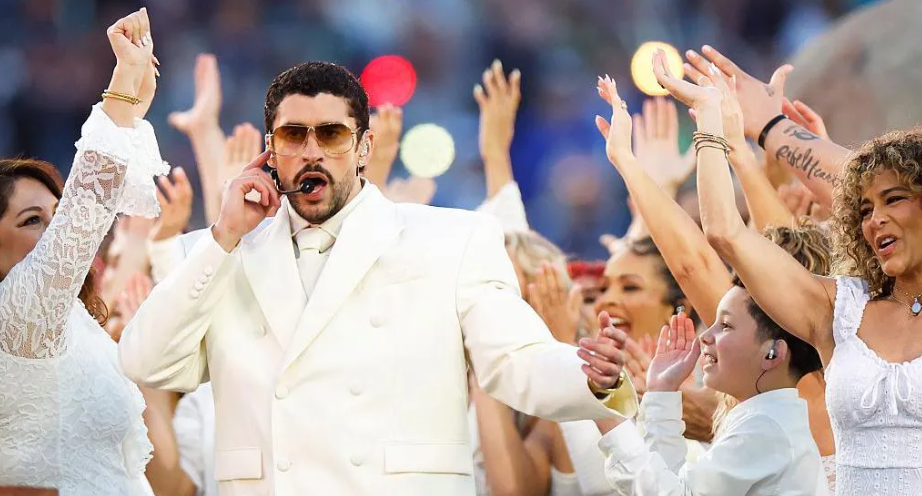
Bad Bunny delivered a landmark Super Bowl half-time show that placed Puerto Rican culture at the center of the world’s most-watched sporting event. Performing for 14 minutes at Levi’s Stadium in Santa Clara, California, the global superstar transformed the stage into a vivid tribute to his roots, blending music, symbolism, and cultural pride.
The performance marked a historic milestone, as Bad Bunny became the first artist to headline a Super Bowl half-time show entirely in Spanish, a breakthrough moment for Latin music and representation.
Star-Studded Performances and Familiar Faces
The show featured surprise appearances from Lady Gaga and Ricky Martin, alongside high-profile cameos from Pedro Pascal, Cardi B, Karol G, and Jessica Alba. Many of the guests danced around Bad Bunny’s iconic casita set — a recreation of a traditional Puerto Rican home that has become a defining element of his live performances.
Moving through a colorful Latin-inspired landscape that included a bar and a nail salon, Bad Bunny performed a medley of his biggest hits, including Tití Me Preguntó, MONACO, and BAILE INoLVIDABLE.
Messages of Unity and Love
While fans expected political commentary aimed at the current US administration, the artist instead focused on unity. Two English-language statements stood out during the show: a billboard reading “The only thing more powerful than hate is love”, and a football bearing the words “Together, We Are America.”
Bad Bunny, whose real name is Benito Antonio Martínez Ocasio, used these moments to reinforce a broader message of solidarity rather than direct confrontation.
Honoring Puerto Rico’s History and Resilience
Puerto Rico’s story was woven throughout the performance. Bad Bunny emerged from a sugarcane field at the start and later climbed an electricity pylon — a clear reference to the island’s fragile infrastructure and the devastation caused by Hurricane Maria in 2017.
His beige sweater, marked with the number 64, was widely interpreted as a symbolic nod to the official death toll from the hurricane, a figure that remains controversial among Puerto Ricans.
Family and community themes also featured prominently, from a staged wedding scene among Latino dancers to a moment where Bad Bunny handed his Grammy Award to a young child as a recorded acceptance speech played in the background.
A Return to the US Spotlight
The Super Bowl performance marked Bad Bunny’s first US appearance since releasing his Grammy-winning album Debí Tirar Más Fotos (I Should Have Taken More Photos). Although he has toured extensively across Latin America and is set to perform in Australia, Japan, and Europe, he has notably excluded the US from his current tour, apart from shows in Puerto Rico.
In past interviews, the artist has said his decision was driven by personal and professional reasons, emphasizing that it was “not out of hate.”
Reactions and Final Moments
The show drew mixed reactions, including criticism from former President Donald Trump, who described the performance negatively on social media. Despite this, many viewers praised the set as a powerful showcase of Latin culture on a global platform.
Bad Bunny closed the performance by saying “God Bless America” in Spanish while naming countries across North and South America. Dancers raised flags behind him, underscoring the pan-American spirit of the finale.
Latin Culture Takes Center Stage
With confident vocals, high-energy choreography, and carefully layered symbolism, Bad Bunny’s Super Bowl half-time show stood out as a defining cultural moment. It reinforced his status not only as one of the world’s most-streamed artists, but also as a global ambassador for Puerto Rican identity.
Sunday night’s performance proved that Latin culture can command the biggest stage in sports — without compromise.