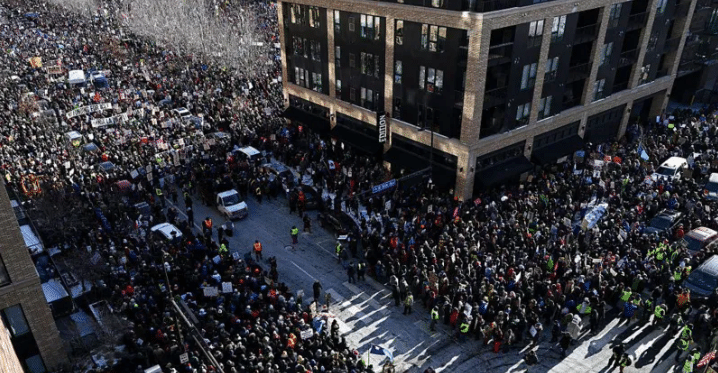

Thousands march in subzero temperatures as opposition grows to federal immigration enforcement in Minnesota
Hundreds of businesses across Minnesota closed on Friday as thousands of protesters took to the streets to oppose the expanded presence of U.S. Immigration and Customs Enforcement (ICE) in the state. The coordinated shutdown, described by organizers as an “economic protest,” urged residents to skip work and school and halt spending to demonstrate resistance to the federal immigration crackdown.
The action comes more than six weeks after immigration operations ordered under the Trump administration intensified in Minnesota. Federal officials say the effort—known as Operation Metro Surge—is a public safety initiative focused on deporting criminals in the country illegally. Critics, however, argue that migrants without criminal records and even U.S. citizens are being swept up in the enforcement.
Clergy Arrested, Mass Protests Held
Tensions escalated Friday morning when about 100 clergy members were arrested at Minneapolis–Saint Paul International Airport during a protest calling on U.S. airlines to refuse transporting ICE detainees. The Metropolitan Airports Commission said the arrests occurred after the demonstration exceeded permitted limits and posed concerns for public safety and airport access.
Despite temperatures plunging to –10°F (–23°C), thousands of demonstrators marched through downtown Minneapolis toward the city’s NBA arena, home of the Minnesota Timberwolves, chanting and playing music during what organizers described as the largest anti-ICE demonstration in the state to date.
Business Owners Cite Economic and Moral Impact
Local business owners said the ICE presence has had a chilling effect on both commerce and community life. Corey Lamb, owner of Harriet Grove Botanicals in Minneapolis, closed his shop to join the protest, calling the raids an economic threat.
“When people are afraid of being detained or disappearing, it hurts not just morally but economically,” Lamb said, adding that many businesses rely on immigrant customers and workers to survive.
Restaurants, tattoo parlors, and retail shops joined the shutdown. Kim Bartmann, who owns six Minneapolis restaurants including Barbette and Gigi’s Café, said sales have dropped more than 30% over the past three weeks due to the ICE operations.
“Economically, it’s a severe blow,” Bartmann said. “We have employees who are U.S. citizens or legally authorized to work who are still too scared to leave their homes.”
Community Anger Intensifies After Fatal Shooting
Public anger has been further fueled by the killing of Renee Good, a 37-year-old Minneapolis woman whose death earlier this month sparked widespread condemnation from local officials. Faith leaders and advocacy groups have linked the incident to broader concerns about federal overreach.
“We want ICE out of Minnesota and out of every state,” said Bishop Dwayne Royster of Faith in Action, calling on Congress to increase oversight of ICE.
Children Detained, Officials Clash Over Policy
Concerns deepened this week after school officials in Columbia Heights, a Minneapolis suburb, confirmed that four students aged five to 17 had been detained by ICE. Local media also reported that a two-year-old child was detained alongside her undocumented father during a traffic stop in south Minneapolis.
In response, Vice President JD Vance urged Minnesota law enforcement agencies to cooperate more closely with federal immigration officers. Minnesota and several of its cities maintain so-called sanctuary policies, which limit cooperation with ICE—policies the Trump administration has criticized as threats to public safety.
Resignations Add to Scrutiny
Adding to the controversy, an FBI agent in Minneapolis resigned this week over concerns about how the bureau handled the investigation into Renee Good’s shooting, according to CBS News and The New York Times. Reports say the agent faced pressure to scale back or reclassify the investigation. The FBI has been contacted for comment.
Earlier this month, U.S. media also reported that at least six federal prosecutors in the Minneapolis U.S. Attorney’s Office resigned over the administration’s handling of the case.
As ICE operations continue, protests and economic pressure are expected to intensify, signaling a growing clash between federal immigration enforcement and local resistance in Minnesota.