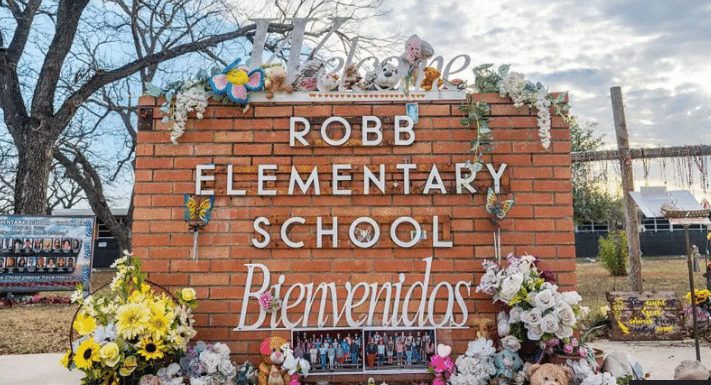

A jury in Texas has acquitted a police officer who faced criminal charges over his actions during the 2022 mass shooting at Robb Elementary School in Uvalde, marking a rare legal outcome tied to law enforcement accountability in school attacks.
Officer Adrian Gonzales was found not guilty of all child endangerment charges linked to his response to the shooting at Robb Elementary School in May 2022, when an 18-year-old gunman killed 19 students and two teachers in Uvalde. The verdict was delivered on Wednesday after roughly seven hours of jury deliberations.
Prosecutors had accused Gonzales of failing to act decisively as the first officer on the scene, arguing that immediate confrontation could have reduced casualties. Special prosecutor Bill Turner told jurors during closing arguments that officers had a duty to intervene in the critical early moments of the attack.
Defense attorney Jason Goss countered that the case unfairly singled out Gonzales, portraying him as a scapegoat for systemic failures during a chaotic and unprecedented crisis. Gonzales, 52, was cleared of 29 counts related to allegations that he abandoned and endangered victims.
Nearly 400 officers from multiple agencies responded to the scene, yet it took 77 minutes from the arrival of the first officers for police to breach the classroom and kill the shooter, according to a 2024 federal review.
That review, released by the US Justice Department under the Biden administration, cited a “lack of urgency” and concluded that authorities failed to recognize the situation as an active shooter incident. The report highlighted “cascading failures of leadership, decision-making, tactics, policy and training.”
The emergency response to the Uvalde shooting has prompted intense public scrutiny and multiple lawsuits. In 2024, victims’ families reached a $2 million settlement with the city of Uvalde over its handling of the tragedy, one of the deadliest school shootings in U.S. history.
While the jury’s decision closes the criminal case against Gonzales, debates over police preparedness, accountability, and emergency response standards continue nationwide.