
Vietnam’s ruling Communist Party has opened its highly anticipated week-long national congress, bringing together hundreds of delegates in Hanoi to determine the country’s top leadership and outline economic and security priorities for the next five years.
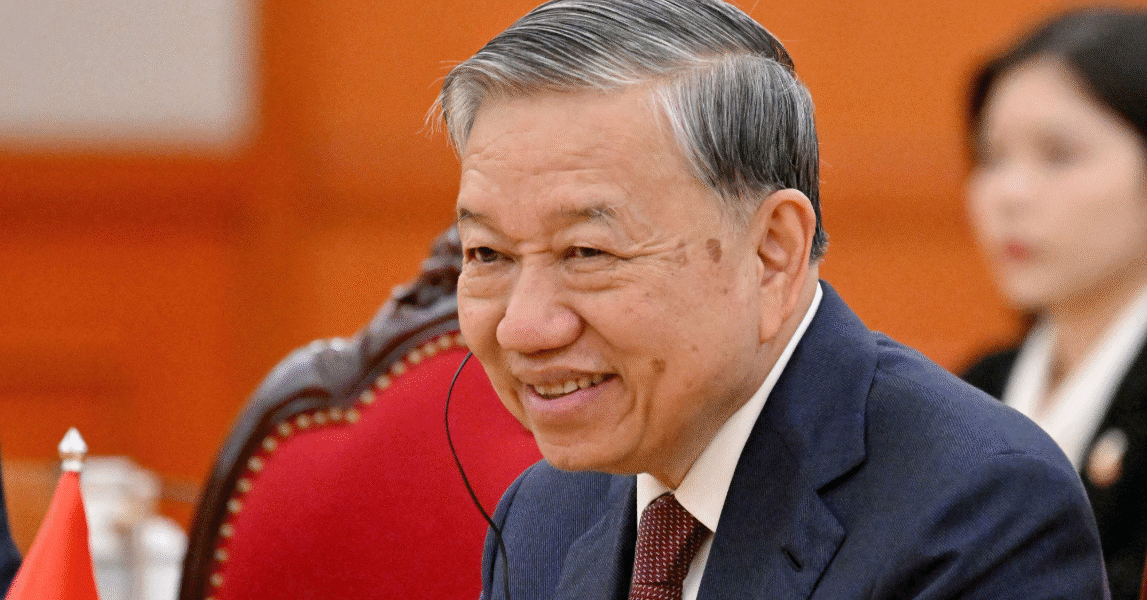
The tightly controlled gathering of the Communist Party of Vietnam, held once every five years, is expected to reinforce the authority of current General Secretary To Lam, who has emerged as the central figure in Vietnam’s political landscape.
Leadership Decisions Expected Behind Closed Doors
Around 1,600 delegates representing more than 5.6 million party members will later elect a new 200-member Central Committee. From a pre-approved shortlist, the committee will then select up to 19 Politburo members, the elite body from which the general secretary is chosen.
Officials familiar with the process say To Lam is widely expected to retain his post. There is also speculation he could assume the presidency, a role recently held by a senior military figure. Any decision on the presidency is likely to be taken after the congress at a subsequent party meeting.
Lam is scheduled to deliver a key address to delegates during the congress, which concludes on January 25 in the capital, Hanoi.
Reform Push Marks Lam’s Short Tenure
At 68, Lam has moved quickly since taking office following the death of his predecessor, Nguyen Phu Trong, in July 2024. Seen as a bold and pragmatic leader, Lam has launched the most sweeping administrative overhaul in decades, cutting tens of thousands of public sector jobs to streamline decision-making.
While the full impact of the reforms is still unfolding, officials say approval times for some investment projects have already improved. These changes coincide with a scaling back of the hard-line anti-corruption campaign that, under Trong, ensnared senior officials and slowed governance.
Economic Growth and Security Dominate Five-Year Plan
A draft party resolution released last October signals that economic expansion and national security will dominate the next five-year agenda. The document targets annual growth of at least 10%, a sharp increase from the previous 6.5% to 7% goal that was not met earlier in the decade.
Security is a recurring theme in the draft, reflecting concerns about global instability. The party plans to strengthen defence capabilities, particularly in border regions, while placing greater emphasis on diplomacy and military preparedness.
Environment Gains Greater Attention
Environmental protection is also emerging as a more prominent issue, reflecting growing public debate in one of Southeast Asia’s most polluted countries. Politburo member Nguyen Xuan Thang has indicated that environmental concerns will feature more strongly in the final resolution.
Strict Security Measures in Place
Security around the congress remains intense. Mobile phone signals are being jammed inside the venue, and delegates are required to stay in designated accommodations throughout the event, underscoring the party’s emphasis on discipline and control.
Once the congress concludes, the Politburo will nominate candidates for the positions of state president, prime minister, and National Assembly chair. Parliamentary elections will follow only after the party finalizes its leadership lineup.