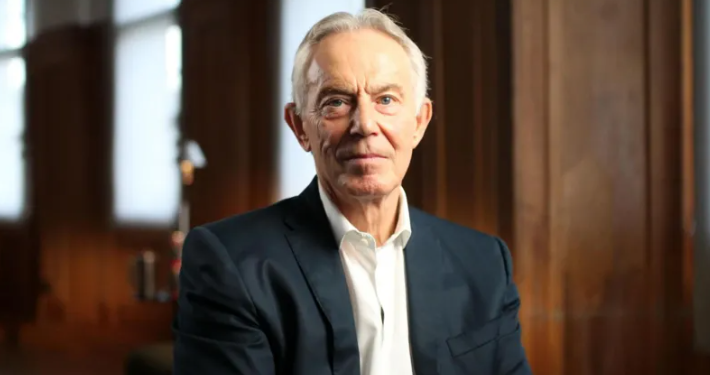

The Trump administration has formally launched a new international body to oversee Gaza’s post-war transition, naming U.S. Secretary of State Marco Rubio and former British prime minister Tony Blair among the founding members of what it calls the “Board of Peace.”
According to a White House statement issued Friday, the initiative forms a central pillar of President Donald Trump’s 20-point plan aimed at ending the conflict between Israel and Hamas and guiding Gaza toward reconstruction and long-term stability.
The board will be chaired by Donald Trump and is expected to temporarily supervise governance in Gaza while coordinating international reconstruction efforts. Trump described the panel earlier this week as the “most prestigious board ever assembled.”
Also joining the founding executive board are Trump’s Middle East envoy Steve Witkoff, presidential adviser and son-in-law Jared Kushner, Apollo Global Management chief executive Marc Rowan, World Bank president Ajay Banga, and U.S. national security adviser Robert Gabriel.
The White House said each member would be assigned a portfolio considered “critical to Gaza’s stabilization and long-term success,” adding that additional appointments would be announced in the coming weeks.
Blair, who led the UK from 1997 to 2007, previously served as Middle East envoy for the Quartet — the U.S., European Union, Russia and the United Nations — where he focused on Palestinian economic development and advancing a two-state framework. He has already taken part in behind-the-scenes discussions on Gaza’s future, including an August White House meeting described by Witkoff as “very comprehensive.”
The former prime minister’s involvement has drawn mixed reactions in the UK. In September, Health Secretary Wes Streeting said Blair’s role could “raise some eyebrows” due to his association with the Iraq War, while also acknowledging his diplomatic credentials, including his role in negotiating the 1998 Good Friday Agreement.
The board’s creation follows the announcement of a separate 15-member Palestinian technocratic body, the National Committee for the Administration of Gaza (NCAG), which will manage day-to-day governance in the territory after the war. The committee will be led by Ali Shaath, a former deputy minister in the Palestinian Authority.
The White House said Nickolay Mladenov, a former UN Middle East envoy, will serve as the Board of Peace’s on-the-ground representative in Gaza, working closely with the NCAG.
Trump’s plan also includes the deployment of an International Stabilisation Force to train and support vetted Palestinian police units. The force will be commanded by Jasper Jeffers, tasked with establishing security and preventing the resurgence of militant groups.
While the U.S. peace plan entered its second phase this month, uncertainty remains over Gaza’s long-term political future and the fate of its 2.1 million residents. Phase one included a ceasefire agreement, hostage and prisoner exchanges, a partial Israeli military withdrawal and a surge in humanitarian aid.
Witkoff said phase two would focus on full reconstruction and the demilitarisation of Gaza, including the disarmament of Hamas and other armed factions. He warned that failure to comply with these terms would result in “serious consequences.”
The ceasefire remains fragile. Gaza’s Hamas-run health ministry reports that nearly 450 Palestinians have been killed in Israeli strikes since it began, while the Israeli military says three soldiers have died in attacks by Palestinian groups. The United Nations has warned that humanitarian conditions remain severe, calling for the unrestricted flow of essential aid.
The conflict was sparked by the Hamas-led assault on southern Israel on 7 October 2023, which killed about 1,200 people and saw 251 taken hostage. Since then, more than 71,260 people have been killed in Gaza, according to local health authorities.