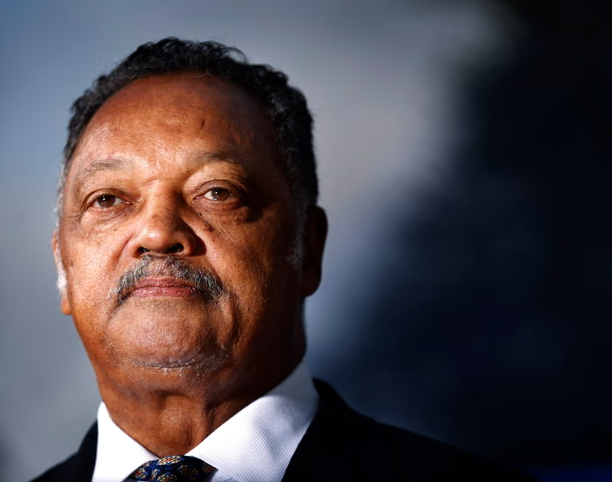
Jesse Jackson Dies at 84: Civil Rights Leader and Two-Time Presidential Candidate Remembered

The United States is mourning the loss of Jesse Jackson, the influential civil rights leader and two-time Democratic presidential candidate, who has died at the age of 84. Jackson, a towering figure in American politics and social justice movements for more than five decades, leaves behind a legacy rooted in equality, economic empowerment, and multiracial coalition-building.
His family confirmed the news in a statement, describing him as a “servant leader” devoted to the oppressed and voiceless around the world. No official cause of death was immediately released. Jackson had lived with progressive supranuclear palsy (PSP) for more than a decade after initially being diagnosed with Parkinson’s disease. In recent years, he was also hospitalized twice with Covid-19.
Early Life and Activism in the Segregated South
Born on 8 October 1941 in Greenville, South Carolina, Jesse Jackson grew up in the deeply segregated American South. As a student at Sterling High School, he excelled in academics and athletics, eventually earning a football scholarship to the University of Illinois in 1959.
During his freshman year, Jackson challenged racial discrimination at the whites-only Greenville public library. In July 1960, he joined a peaceful protest later known as the “Greenville Eight,” helping to push the integration of the public library system.
He later transferred to North Carolina Agricultural and Technical College in Greensboro, where he continued his activism and became student body president. His leadership style, he once said, was shaped by his time as a quarterback—assessing challenges, motivating teams, and playing to strengths.
Partnership with Martin Luther King Jr.
Jackson’s national prominence grew after he met Martin Luther King Jr. in the early 1960s. King became his mentor and invited him to join the Southern Christian Leadership Conference (SCLC).
Jackson played a leading role in Operation Breadbasket, an SCLC initiative focused on economic justice and job opportunities for Black Americans. He was present in Memphis, Tennessee, on 4 April 1968 when King was assassinated at the Lorraine Motel—an event that profoundly shaped the rest of his life.
Following King’s death, Jackson continued his work in civil rights and founded People United to Save Humanity (PUSH) in 1971, aimed at improving economic conditions and educational opportunities for Black communities.
Presidential Campaigns and Political Influence
In 1984, Jackson made history by launching a nationwide campaign for the Democratic presidential nomination, following in the footsteps of Shirley Chisholm. Though he did not secure the nomination, his campaign energized millions of voters and broadened political participation among minorities and young Americans.
He ran again in 1988, performing even more strongly before losing the nomination to Michael Dukakis. His campaigns helped pave the way for greater diversity in American politics.
Two decades later, Barack Obama acknowledged Jackson’s trailblazing efforts, recognizing that his own historic election as the first Black president built upon the groundwork laid by leaders like Jackson.
The Rainbow PUSH Coalition and Later Years
After his presidential bids, Jackson founded the National Rainbow Coalition, later merging it with PUSH to create the Rainbow PUSH Coalition. The organization has focused on voting rights, economic justice, educational access, and corporate accountability. Over the years, it provided millions of dollars in scholarships and financial assistance to struggling families.
In 2000, President Bill Clinton awarded Jackson the Presidential Medal of Freedom, the nation’s highest civilian honor, recognizing his decades of advocacy and leadership.
Throughout the Covid-19 pandemic, Jackson remained vocal about racial disparities in healthcare and systemic inequality. He consistently emphasized that the fight for justice required sustained, multiracial cooperation.
A Lasting Legacy in the Civil Rights Movement
Jesse Jackson’s influence spanned from the height of the 1960s civil rights movement to the modern era of Black Lives Matter activism. He often quoted King’s belief that “the arc of the moral universe is long, but it bends toward justice,” while reminding supporters that progress requires active effort.
As news spreads that Jesse Jackson dies at 84, tributes are pouring in from political leaders, activists, and citizens who credit him with expanding the boundaries of American democracy.
His life’s work—centered on justice, equality, and coalition-building—continues to shape the national conversation on race, politics, and human rights.