
Finance ministers from the Group of Seven and key partner economies have opened fresh talks on reducing their dependence on Chinese rare earths, as concerns grow over supply security for industries ranging from defence to clean energy.
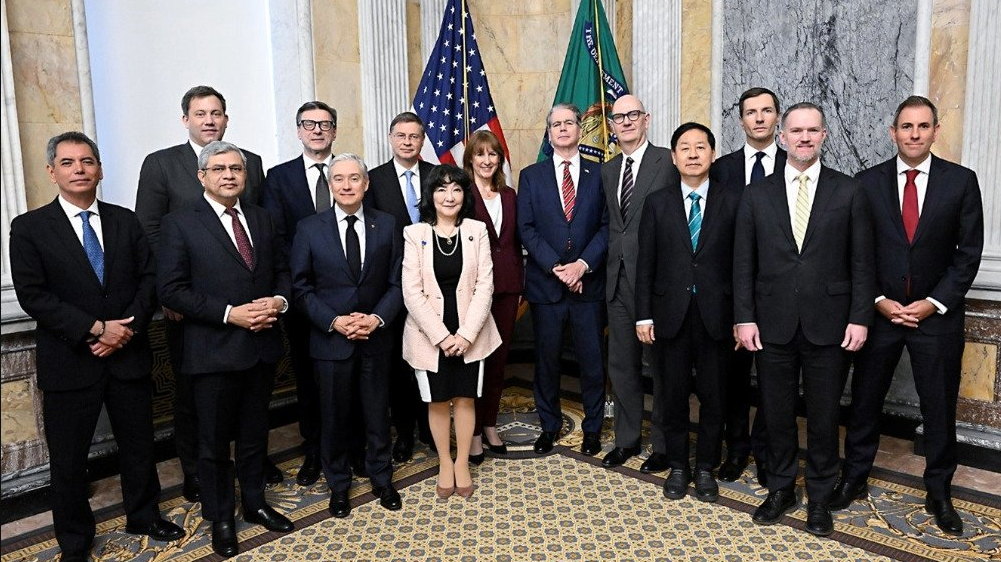
The discussions took place in Washington and were convened by Scott Bessent, bringing together officials from G7 nations — Japan, the UK, France, Germany, Italy, Canada and the United States — alongside representatives from Australia, Mexico, South Korea and India.
Senior officials from the U.S. side, including Jamieson Greer, as well as the U.S. Export-Import Bank and JP Morgan, also took part. No joint communiqué was released after the meeting.
Focus on diversification, not decoupling
According to the U.S. Treasury, the talks centred on ways to secure and diversify supply chains for critical minerals, with an emphasis on “de-risking rather than decoupling” from China. Officials examined ideas such as setting a price floor for rare earths and forming new partnerships to accelerate non-Chinese production.
A U.S. official said Washington encouraged participants to intensify efforts to curb reliance on Chinese supplies, particularly after Beijing introduced tighter export controls on rare earth materials, including recent restrictions affecting Japan.
Japan calls for swift action
Japanese Finance Minister Satsuki Katayama said there was broad agreement among participants on the urgency of reducing dependence on China. She outlined short-, medium- and long-term strategies to strengthen alternative supply chains.
These measures include creating markets based on labour and human rights standards, along with policy tools such as public financing, tax incentives, trade measures and minimum price mechanisms. “I stressed the importance of committing to these measures,” Katayama told reporters.
China’s dominance remains a challenge
The countries involved, together with the European Union, account for roughly 60% of global demand for critical minerals. Yet China continues to dominate refining, processing between 47% and 87% of key materials such as copper, lithium, cobalt, graphite and rare earths, according to the International Energy Agency.
These minerals are vital for semiconductors, batteries, renewable energy systems and defence technologies. Last week, China announced new export bans on certain dual-use items destined for Japan’s military sector.
Europe urged to move faster
German Finance Minister Lars Klingbeil said the Washington talks were an early step, with many issues still unresolved. He confirmed that rare earth pricing and supply partnerships would feature prominently under France’s presidency of the G7 this year.
However, Klingbeil cautioned against framing the effort as an anti-China alliance, urging Europe to accelerate its own initiatives instead. “Neither complaining nor self-pity helps us — we have to become active,” he said, pointing to the need for stronger EU-level financing and investment in recycling, which he described as having “big potential” to reduce future dependencies.
China’s embassy in Washington did not immediately respond to requests for comment.